
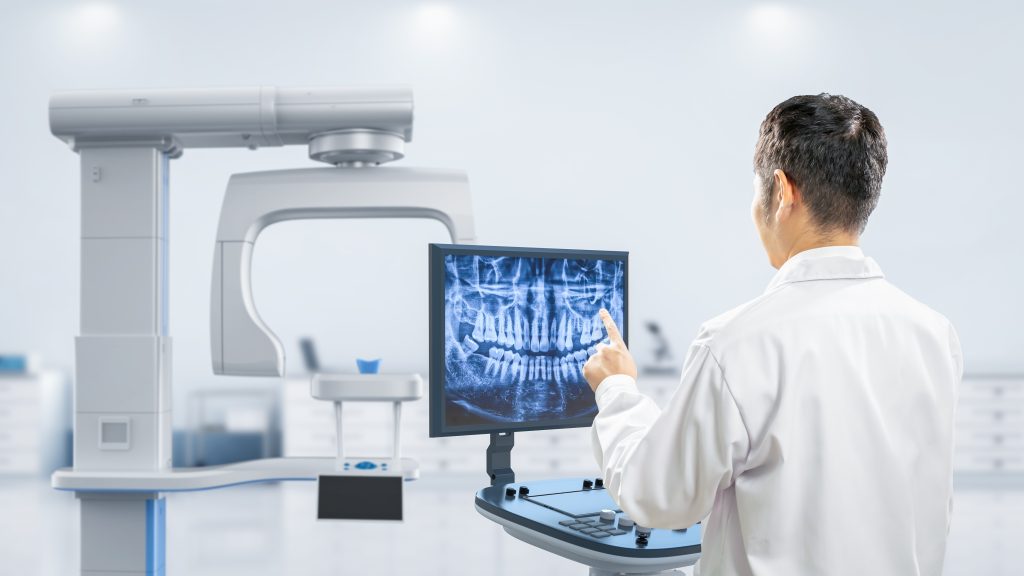
At Smile With Grace Dental Care, located in Ridgefield Park, NJ, we understand that some patients may have concerns about dental X-rays. Questions about their safety, radiation levels, and necessity often arise, and we’re here to clear up the myths and present the facts. In this post, we’ll explore the truth about dental X-rays, their importance in oral health, and why they are a safe and vital tool for maintaining a healthy smile.
Understanding Dental X-Rays
Dental X-rays, also known as radiographs, are diagnostic images that allow dentists to see what’s happening beneath the surface of your teeth and gums. These images are essential for identifying issues such as cavities, infections, bone loss, and other conditions that may not be visible during a regular oral examination.
Modern dental X-ray technology has advanced significantly, making it safer and more efficient than ever before. Digital X-rays, in particular, use up to 90% less radiation compared to traditional film X-rays, providing detailed images with minimal risk.
Myths vs. Facts About Dental X-Rays
Myth 1: Dental X-Rays Are Dangerous
Fact: Dental X-rays expose you to a very low level of radiation. To put it into perspective, a single digital dental X-ray exposes you to less radiation than a short flight on an airplane. For example, a bitewing X-ray typically exposes you to about 0.005 millisieverts (mSv) of radiation, compared to 0.01 mSv during a two-hour flight.
At Smile With Grace Dental Care, we use state-of-the-art digital X-ray technology to minimize exposure even further, ensuring the process is as safe as possible.
Myth 2: Dental X-Rays Aren’t Necessary If You Don’t Have Pain
Fact: Many dental issues, such as cavities, gum disease, and impacted teeth, don’t cause noticeable symptoms until they are advanced. X-rays allow us to detect these problems early, often preventing the need for more extensive and costly treatments later.
Think of X-rays as a preventative tool that helps your dentist see the “bigger picture” of your oral health.
Myth 3: Dental X-Rays Are Unsafe for Children and Pregnant Women
Fact: Dental X-rays are safe for children when used appropriately. Children may even need X-rays more often than adults because their teeth and jaws are still developing, and they are more susceptible to cavities.
For pregnant women, dental X-rays are generally avoided unless absolutely necessary. If an X-ray is required, precautions like protective lead aprons are used to shield both the patient and the developing baby.
Why Are Dental X-Rays Important?
Dental X-rays play a critical role in maintaining oral health for several reasons:
- Early Detection of Cavities:
X-rays can identify cavities in their early stages, allowing for prompt treatment and prevention of further decay. - Monitoring Bone Health:
X-rays help assess the density and health of your jawbone, which is crucial for detecting bone loss associated with gum disease or tooth loss. - Checking for Hidden Issues:
Impacted teeth, cysts, abscesses, and tumors can all be identified through X-rays, enabling early intervention. - Evaluating Tooth Development:
For children and teens, X-rays track the development of their permanent teeth, ensuring proper alignment and spacing. - Planning Treatments:
X-rays provide detailed information that dentists use to plan procedures such as root canals, dental implants, and orthodontic treatments.
Are Dental X-Rays Safe?
Yes, dental X-rays are safe when performed by trained professionals using modern technology. At Smile With Grace Dental Care, your safety is our top priority. Here’s how we ensure your peace of mind:
- Low Radiation Levels: Digital X-rays reduce radiation exposure by up to 90%.
- Protective Gear: Lead aprons and thyroid collars are used to shield your body from unnecessary exposure.
- Adherence to Guidelines: We follow strict guidelines from the American Dental Association (ADA) and the Food and Drug Administration (FDA) regarding the frequency and necessity of X-rays.
Key Statistics on Dental X-Ray Safety
- A single dental X-ray emits 0.005 mSv of radiation, which is less than the radiation exposure from eating 50 bananas (yes, bananas naturally contain small amounts of radioactive potassium!).
- A full set of dental X-rays is equivalent to about 1-2 days of natural background radiation that we are exposed to daily from the environment.
- Digital X-rays reduce radiation exposure by up to 90% compared to traditional X-rays.
These statistics highlight just how minimal the risk is when it comes to dental X-rays.
FAQs About Dental X-Rays
Q: How often should I get dental X-rays?
A: The frequency depends on your oral health needs. For healthy patients, X-rays are typically recommended every 1-2 years. Those with a history of dental issues may need them more often.
Q: Can I refuse dental X-rays?
A: Yes, you can decline X-rays, but it’s important to understand that this limits your dentist’s ability to detect and treat potential issues early.
Q: Are dental X-rays covered by insurance?
A: Most dental insurance plans cover X-rays as part of routine preventive care. Check with your provider for specific details.
Q: What precautions are taken to ensure safety?
A: We use the latest digital X-ray equipment, protective lead aprons, and strict protocols to minimize radiation exposure.
Contact Smile With Grace Dental Care
At Smile With Grace Dental Care, we are committed to providing exceptional dental care in a safe and comfortable environment. If you have any concerns about dental X-rays or your oral health, don’t hesitate to reach out.
📞 Phone: 201-641-1111
📧 Email: SWGDental@gmail.com
📍 Address: 195 Euclid Ave, Ridgefield Park, NJ 07660
We’re here to help you achieve a healthy, confident smile! Schedule your appointment today to experience the best in modern dentistry.
Dental X-rays are an invaluable tool in maintaining your oral health. By separating myths from facts, we hope to reassure you of their safety and importance. At Smile With Grace Dental Care, your well-being is always our priority!